





The Key Role of Mobile Asphalt Plants in Maintaining Construction Continuity Across Multiple Projects
Latin America’s road and bridge construction market is increasingly characterized by fragmented project distribution, tight schedules, and overlapping execution cycles. Contractors are often required to deliver paving works across several sites simultaneously or to move quickly from one project to another with minimal downtime. Under these conditions, construction continuity has become a core performance indicator, directly affecting cost control, contract compliance, and overall profitability.
In this context, mobile asphalt plants(planta asfaltica movil) are playing an increasingly strategic role. Their ability to relocate quickly, adapt to different project scales, and resume production with minimal setup time makes them well suited to rapid switchover modes between multiple projects. Rather than serving as auxiliary equipment, mobile plants are now central assets in modern road construction strategies.

[edit] Why Rapid Project Switchover Has Become A Structural Challenge
Before examining equipment solutions, it is important to understand why rapid switchover between projects has become the norm rather than the exception in Latin America.
Infrastructure investment is no longer concentrated in a single mega-project. Instead, governments and concessionaires are launching multiple medium-sized road, bridge, and rehabilitation contracts across wide geographic areas. Contractors may complete one section of a highway while preparing to mobilize for another project hundreds of kilometers away.
Under these conditions, fixed asphalt production setups can become bottlenecks. Dismantling, relocating, and recommissioning a traditional plant often results in long idle periods, lost production days, and higher indirect costs. This is precisely where the mobility and flexibility of a mobile asphalt plant offer measurable advantages.
[edit] How Mobile Asphalt Plants Support Construction Continuity
[edit] Fast Mobilization And Short Commissioning Time
One of the most significant advantages of mobile asphalt plants is their ability to be transported and installed quickly. Modular structures, pre-assembled components, and simplified foundations allow contractors to relocate production capacity with minimal civil works.
In rapid switchover scenarios, reducing downtime between projects is critical. A mobile asphalt plant can often be operational within days rather than weeks, allowing paving teams to maintain momentum and avoid costly interruptions.
[edit] Flexible Capacity For Variable Project Scales
Multi-project operations rarely require the same production capacity at every site. Urban road rehabilitation, rural highways, and bridge approaches all have different asphalt demand profiles.
Mobile plants typically offer flexible output ranges that can be adjusted to match project needs. This avoids the inefficiency of operating oversized equipment at low utilization rates, while still ensuring sufficient capacity during peak paving periods.
[edit] Operational Advantages In Multi-Project Environments
[edit] Decentralized Production Reduces Logistics Risk
When projects are dispersed across different regions, centralized asphalt production can create logistical challenges. Long transport distances increase fuel costs, temperature loss, and the risk of delivery delays.
Deploying a mobile asphalt plant closer to each project site improves delivery reliability and mix quality. This proximity is particularly valuable when projects run concurrently, as it reduces competition for transport resources and simplifies dispatch coordination.
[edit] Simplified Quality Control Across Projects
Maintaining consistent asphalt quality across multiple projects is a common concern for contractors. Mobile plants equipped with modern control systems allow standardized recipes and production parameters to be replicated at each site.
This consistency supports compliance with varying technical specifications while reducing the learning curve for operators during project transitions.
[edit] Cost Considerations And Investment Logic
[edit] Evaluating Price Versus Utilization
When contractors assess the price of asphalt plant(precio de planta de asfalto) options, mobile solutions are sometimes perceived as more expensive on a per-ton basis. However, this view often overlooks utilization efficiency.
In multi-project scenarios, higher utilization rates and reduced idle time can significantly improve overall return on investment. A mobile asphalt plant that operates continuously across several projects may generate more value than a lower-priced stationary plant that sits idle between contracts.
[edit] Lower Indirect Costs During Transitions
Project transitions generate indirect costs such as site demobilization, transport coordination, and reinstallation labor. Mobile plants are designed to minimize these costs through integrated transport frames, quick-connect systems, and standardized setup procedures.
Over a year of frequent project switching, these savings can outweigh differences in initial equipment pricing.

[edit] Regional Perspective: Mobile Plants In Colombia
[edit] Market Conditions Favoring Mobility
In Colombia, road construction projects are often distributed across mountainous terrain and remote regions. Transport infrastructure constraints make centralized asphalt supply less practical for many contracts.
As a result, interest in asphalt plant Colombia(planta de asfalto Colombia) solutions has shifted toward mobile configurations that can adapt to changing project locations. Contractors benefit from shorter haul distances, improved schedule reliability, and greater control over production timelines.
[edit] Supporting PPP And Maintenance Contracts
Colombia’s PPP and long-term maintenance programs further reinforce the value of mobile plants. These contracts often require contractors to perform periodic works at different locations over several years. A mobile plant allows asphalt production capacity to follow the work, rather than remaining tied to a single site.
[edit] Technical Features That Enable Rapid Switchover
[edit] Modular Design And Transport Integration
Modern mobile asphalt plants are engineered with transportability in mind. Modules are sized to comply with road transport regulations and can be moved without extensive disassembly.
This design philosophy directly supports rapid redeployment and reduces the risk of component damage during relocation.
[edit] Automated Control And Recipe Management
Automation plays a key role in fast project switching. Stored recipes, automatic calibration, and centralized control interfaces allow operators to resume production quickly after relocation.
This reduces commissioning errors and ensures that quality targets are met from the first production run at a new site.
[edit] Strategic Implications For Contractors
[edit] Building A Mobile-Centered Production Strategy
For contractors managing multiple projects, mobile asphalt plants are no longer a tactical choice—they are part of a broader operational strategy. Mobility enables companies to respond faster to new tenders, optimize asset utilization, and reduce dependency on fixed infrastructure.
[edit] Enhancing Competitive Positioning
Clients increasingly value contractors who can demonstrate reliable scheduling and minimal disruption across projects. A mobile production setup strengthens this value proposition by supporting continuity, flexibility, and quality consistency.

[edit] Conclusion
As road and bridge construction in Latin America becomes more fragmented and schedule-driven, construction continuity under rapid project switchover modes is emerging as a decisive success factor. Mobile asphalt plants address this challenge by combining fast mobilization, flexible capacity, and decentralized production.
When evaluated beyond initial price of asphalt plant considerations, mobile solutions often deliver superior economic and operational performance in multi-project environments. From Colombia to other regional markets, the ability to move asphalt production quickly and efficiently is transforming how contractors manage complexity and maintain momentum. In this evolving landscape, mobile asphalt plants are not simply equipment choices—they are strategic enablers of continuous construction execution.
Featured articles
Check out some of the best features and news from Designing Buildings as well as key stories from around the web.
Listed structures on the rail network
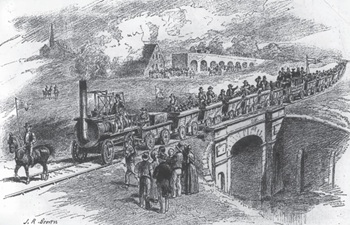
Heritage interests and operational requirements must be balanced.
Historic England publishes research into embodied carbon when retrofitting traditional buildings.

New Prime Minister delivers on ECA call for cut in electricity costs.

CIOB reacts to the announcement of Andy Burnham as Prime Minister.

Heritage and conservation science workforce survey - Have your say.

England's Suburbs 1820-2020. Book review.

New, more proportionate and targeted approach for higher-risk building assessments.

Government brings British Steel into public ownership.

UKCW Birmingham returns with bold new theme and focus.
New guidance published on competence requirements for self-certification schemes.
Construction Management, 8 July

NEETs crisis drives interest in trades, but apprenticeships barriers remain.
Passive fire protection webinar

MEP services penetration seals.